Subheading: Building Legacy with Purpose
Estimated Reading Time: 6 minutes
Tagline: A spiritual guide to intentional living,
leadership, and legacy, where faith fuels vision and structure secures impact.
Author: Joy Ajibade
“Values are like fingerprints. Nobody’s are the same, but
you leave them all over everything you do.”
— Elvis Presley
Introduction
Legacy begins with what you value the most. This is so,
because legacy doesn’t happen by accident, it’s built with intention.
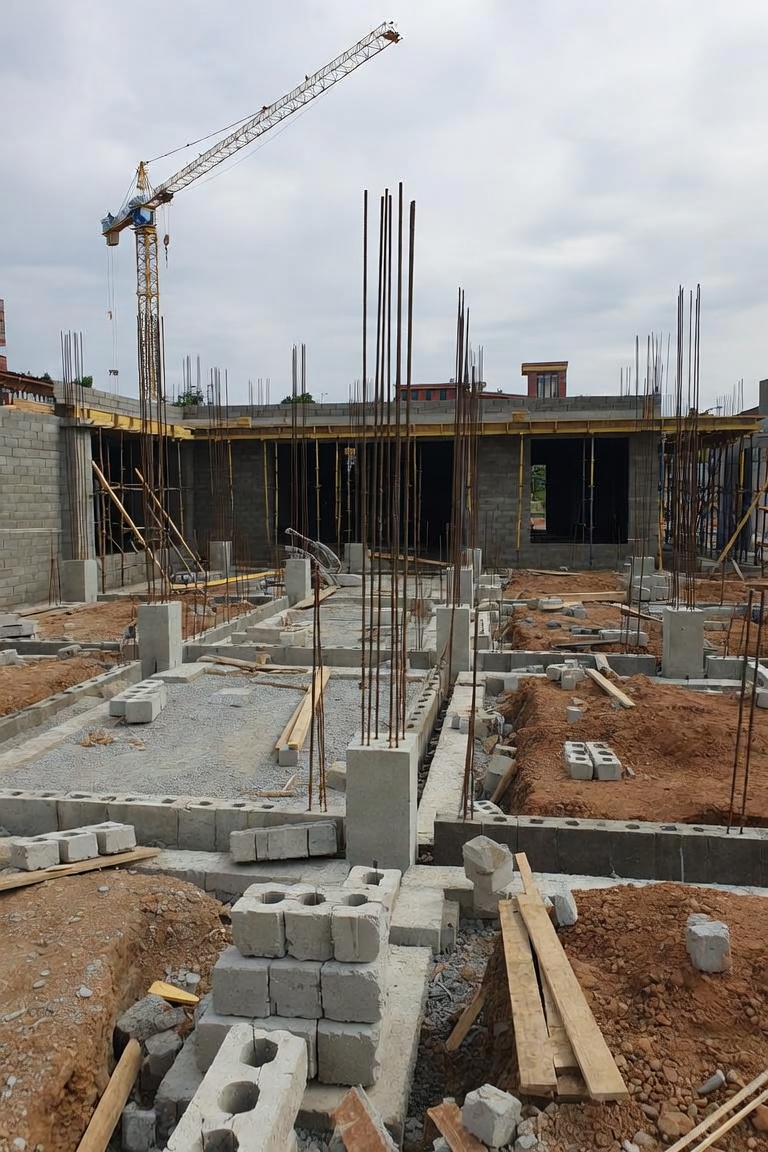
Before you build a life, a ministry, a business, or a legacy, you must first
dig deep and lay a solid foundation. That foundation is not money, talent, or
opportunity. It's your values!
Values shape your decisions, guide your behavior, define your culture, and
determine your impact. Without values, leadership becomes reactive, legacy
becomes unstable, and purpose becomes vague. In this post, we will explore why
values must come first in anything that is meant to last.
What Are Values?
Values are your internal compass. They are guiding beliefs
that influence every decision you make. They answer the question, "What
matters most to me?" and help you lead from a place of consistency and
conviction.
Proverbs 4:23 says, "Guard your heart with all diligence, for out of it
are the issues of life."
Consequently, this scripture shows that your heart houses your values. And your
values ultimately shape your outcomes.
Why Do Values Matter?
Your values are the bridge between your faith and the
framework that carries it.
• Values preserve destiny. Consider Joseph. Though wrongly accused, he refused
to sin against God because integrity was a core value for him. That decision
preserved not just his future but the salvation of many. Likewise, Daniel chose
consecration over compromise in Babylon. He drew a line with his values and
never crossed it, and the result was that God elevated him above the governors
and kings. In both cases, their values became the boundary lines that protected
their destiny.
Without clearly defined values, compromise becomes easy, and culture becomes
chaotic.
• Your legacy rises or falls on your values. Legacy is not just about what you
do. It’s about what you pass down. You can build fast on charisma or skill, but
only values make it last. Psalm 11:3 asks, "If the foundations be
destroyed, what can the righteous do?" Foundations are unseen but
essential. In the same way, your values may not always be visible, but they hold
everything together.
You can hand over your ministry or business to your children, but if you don’t
pass on your values, you leave them without a compass. Systems can be inherited
but values must be imparted. Long-term legacy depends more on values than on
money, methods, or momentum.
How to Identify and Anchor Your Core Values
• Reflect on defining moments. What has shaped your walk
with God? What moments revealed what matters most to you?
• Ask key questions. What do I want to be remembered for? What truths do I want
my children or team to live by?
• Write a values statement. For yourself, your family, your church, or your
organization. Be intentional.
• Anchor them in Scripture. For example:
o Humility – Micah 6:8
o Integrity – Proverbs 10:9
o Love – 1 Corinthians 13:1-8
o Excellence – Colossians 3:23
When values are clear, decision-making becomes easier and more aligned with
your vision.
It was Roy Disney that said, “When values are clear, decisions are easier.”
Infusing Values into Structure and Culture
It’s not enough to know your values. You must infuse them
into how you live, lead, and build.
• Let your values determine your priorities and policies.
• Hire, train, and correct based on your values.
• Share stories that reinforce your values.
• Create systems that protect and promote what matters most.
Legacy is shaped when people consistently experience what you consistently
uphold.
My Personal Reflection
Early in our journey as ministry leaders, my husband and I
sat down to clarify what mattered most to us. We listed what our values are,
and this included values like honor, excellence, generosity, and faithfulness.
We infused our values as much as we could into every team we built and every
system we created reflected those convictions.
I recall a defining moment when we had to let go of a staff member who no
longer aligned with our culture of honor and integrity. It was not an easy
decision to release that staff as we were concerned about her future and what
would happen to her ultimately; but our values were our guide. We knew keeping
the person would undermine the very foundation we were building.
Instead of handling the matter emotionally, we prayed and acted in love but
with firmness while walking in the light of God’s word as our guide. That
single decision reinforced our values more clearly than any training session
could have. It sent a message: “We value people, but not at the expense of the
values we stand for”.
That experience reminded us that values are not just words, but they are
boundaries that protect what matters most. Over time, we've seen that culture
of integrity echoed in teams we lead and in the fruit of the people God has
privileged us to raise. Values must be protected, not just professed. They are
the foundation upon which lasting culture and legacy are built.
Call to Action
Take time this week to write down your top 5 core values.
Match them with Scripture. Then ask:
Do my systems, schedule, and speech reflect these values?
If not, start adjusting today, because when values are vague, legacy is
unstable. But when values are clear, legacy becomes inevitable.
The scripture Matthew 7:24 reflects the importance of putting values into
practice just like building on a solid foundation.
“Therefore everyone who hears these words of mine and puts them into practice
is like a wise man who built his house on the rock.” — Matthew 7:24 (NIV)
Stay tuned for next week’s post in the Faith & Framework
series: "Designing with the End in Mind: Structuring for Generational
Impact."